
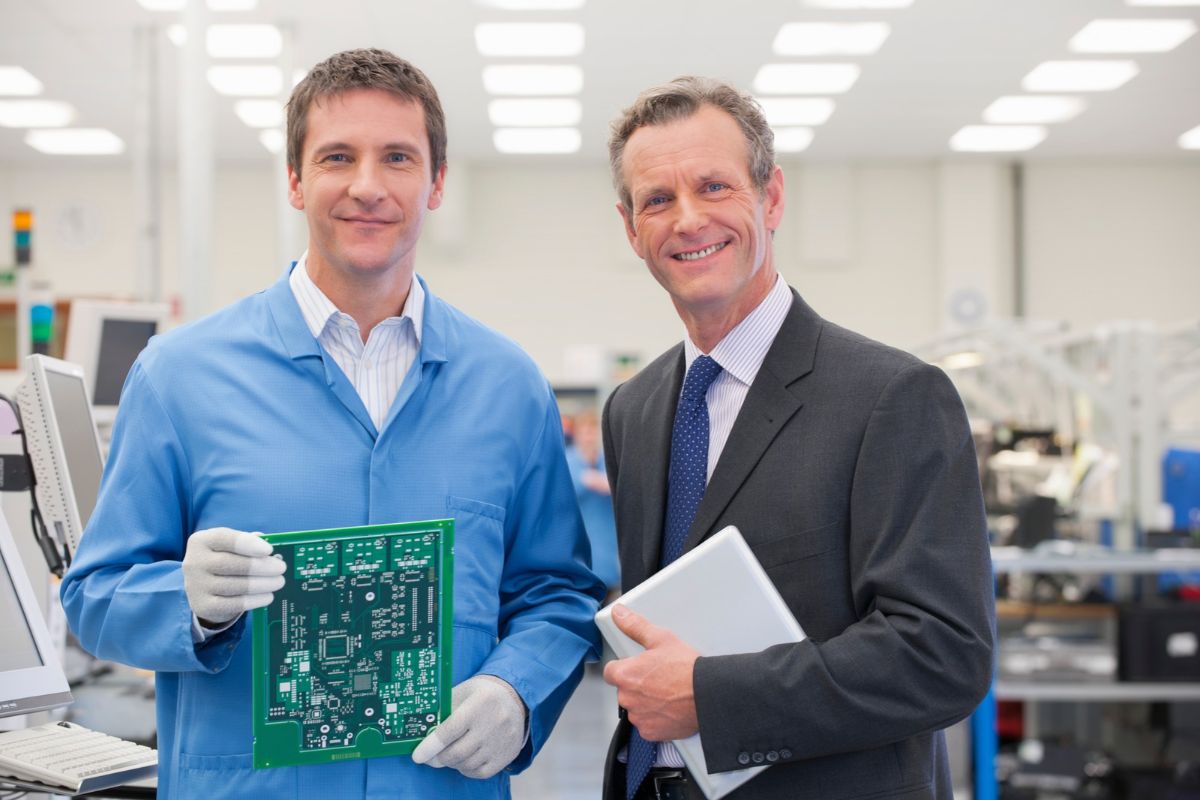
Finding a top PCB manufacturer isn’t just about choosing the lowest quote or the flashiest equipment. It’s about finding a partner who can bring your designs to life reliably, efficiently, and without unnecessary headaches.
With the global PCB market valued at approximately $82.7 billion in 2025, there’s no shortage of potential partners. But how do you separate the best from the rest?
In this guide, we’ll explore eight essential considerations, including:
- Technical capabilities and materials
- Quality standards and testing procedures
- Engineering support and production scalability
- Delivery reliability, communication, and overall value
Let’s start with the technical capabilities that distinguish a dependable PCB manufacturing partner.
What Technical Capabilities Should a Top PCB Manufacturer Offer?
A manufacturer can have an impressive equipment list and still be the wrong fit for your board. Start by matching their actual production capabilities to your design.
1. Manufacturing Capabilities That Match Your Project
First, find out whether the company fabricates bare boards, assembles components onto them, or offers both. Then get specific. Your shortlist should reflect the requirements that matter most:
- Board type: Rigid, flex, rigid-flex, or high-density interconnect (HDI).
- Design limits: Layer count, minimum trace width and spacing, via structures, and controlled impedance.
- Production scope: Prototypes, small batches, or repeat production runs.
There is no single best PCB manufacturer for every design. Confirm which facility will build your boards and whether it has experience with similar designs.
2. Experience With PCB Materials and Manufacturing Processes
The substrate and finish matter just as much as the board layout. Standard FR-4 works for many designs, but high-temperature environments, demanding RF signals, or tight packaging may call for high-Tg materials, low-loss laminates, or polyimide flex circuits.
A strong partner should also help you choose appropriate copper weights and finishes, such as HASL, ENIG, or OSP. The most technically complex specification isn’t necessarily the right one for your application. Search for a manufacturer who understands the trade-offs.
How Can You Verify a PCB Manufacturer’s Quality and Reliability?
Anyone can promise “high-quality PCBs.” The useful question is how they prove it.
3. Industry Certifications and Quality Standards
Look for documented processes, not a string of impressive-looking logos. ISO 9001 certification indicates a quality management system, while IPC specifications set requirements or acceptance criteria for particular products and processes.
Key standards worth recognizing include:
- IPC-A-600: Acceptability of bare printed boards.
- IPC-6012: Performance requirements for rigid boards.
- IPC-A-610 and J-STD-001: Acceptability of electronic assemblies and requirements for soldered assemblies, respectively.
Industry-specific work may require additional qualifications, such as AS9100 for aerospace or IATF 16949 for automotive suppliers. RoHS, REACH, and UL address different compliance or safety requirements, so don’t treat them as interchangeable quality certifications. Verify that relevant credentials cover the facility doing your work.
4. Comprehensive Inspection and Testing Procedures
Quality control shouldn’t begin when finished boards start failing. Ask how the manufacturer checks products throughout production:
- Automated optical inspection (AOI) flags visible pattern or assembly defects.
- Electrical testing checks continuity and isolation; flying-probe testing is one possible method.
- X-ray inspection can reveal hidden solder-joint issues in assembled boards.
Traceability is important, too. A capable manufacturer should be able to explain how it tracks materials, documents defects, and investigates recurring problems. That’s much more meaningful than a vague promise of zero defects.
Can the Manufacturer Support Your Design and Production Needs?
A good manufacturer doesn’t just build what arrives in its inbox. It spots potential trouble before that trouble becomes an expensive pile of scrap.
5. Design for Manufacturability (DFM) Support
Design for Manufacturability (DFM) means checking whether a PCB design can be produced reliably and efficiently with the intended processes. A worthwhile review might flag tight trace spacing, problematic vias, unrealistic stackups, or component-placement issues before fabrication or assembly begins.
Ask whether an engineer reviews your files and explains necessary changes. You want a partner who raises questions early, not one who silently pushes a risky design into production.
6. Prototyping, Quick-Turn Production, and Scalability
Early development is about learning fast. Quick-turn prototypes let you test a design and make revisions without throwing your entire project schedule off track. Later, the priorities shift toward consistent yields, repeatability, and capacity.
Before committing, compare the manufacturer’s support for both stages:
- Prototypes: Turnaround time, minimum order size, and engineering feedback.
- Production: Capacity, process consistency, and plans for increasing volume.
A partner that can support both stages may make the transition smoother, but don’t assume prototype performance guarantees high-volume readiness. Confirm the details upfront.
How Important Are Lead Times and Communication When Choosing a PCB Manufacturer?
Even excellent boards become a problem when they arrive after your launch date. Delivery reliability matters just as much as manufacturing speed.
7. Reliable Delivery and Responsive Customer Support
Ask for a realistic schedule based on your board’s complexity, materials, testing requirements, and order size. A flashy quick-turn promise means little if a specialty laminate or critical component is backordered.
Before committing, ask three practical questions:
- What is the standard lead time? Get a quote for your actual specifications, not a generic estimate.
- How are delays communicated? Look for early warnings, clear status updates, and a contact who can explain the issue.
- Can you handle urgent changes? Discuss expedited options and how schedule changes affect pricing.
Strong customer support goes beyond answering emails quickly. The manufacturer should flag design concerns, explain trade-offs, and keep you informed when conditions change. If possible, request recent on-time delivery data or an example of how the team handled a production setback. Transparency is a better sign than unrealistic promises.
Is the Lowest Price Always the Best Value When Choosing a PCB Manufacturer?
Price matters, but the cheapest quote isn’t necessarily the least expensive path to a finished product. Rework, delays, and missed requirements can eat up an apparent bargain fast.
8. Transparent Pricing and Total Cost of Ownership
To make a fair comparison, ask manufacturers to quote the same specifications, quantities, testing requirements, and delivery terms. Then look beyond the number at the bottom:
- Lowest upfront price: May leave out tooling, engineering changes, inspection, or shipping.
- Best overall value: Accounts for dependable quality, technical support, realistic lead times, and costs across the production run.
A higher quote isn’t automatically better, either. Ask what you’re paying for and whether those services actually benefit your project.
Compare how each provider handles revisions, defects, and unexpected delays. A manufacturer that identifies a design issue before production can save more than a small discount ever would. Ultimately, the right partner is the one that delivers boards meeting your requirements at a predictable total cost.
Looking for a Top PCB Manufacturer? Partner With Imagineering
The right PCB manufacturer brings much more to the table than equipment and competitive pricing. Technical expertise, rigorous quality control, engineering support, and dependable delivery all contribute to a successful project.
Choosing carefully helps you avoid costly mistakes, minimize production delays, and bring reliable products to market.
At Imagineering, we understand that every PCB project comes with its own technical requirements, production challenges, and budget considerations. Our team is here to help you navigate those complexities with confidence.
Whether you’re developing a prototype or preparing for production, contact Imagineering today to discuss your project and discover what the right manufacturing partnership can accomplish.
Quick Summary
Choosing a top PCB manufacturer requires evaluating more than price and production speed. This guide explores eight essential factors, including technical capabilities, quality standards, engineering support, scalability, and delivery reliability, to help businesses identify the right manufacturing partner for their needs.
PCB manufacturer FAQs
Look for a manufacturer with proven technical capabilities, relevant quality certifications, thorough testing procedures, and dependable customer support. The best partner should also offer engineering expertise and production capabilities suited to your specific project.
ISO 9001 certification is a strong indicator of an established quality management system, while IPC standards help define manufacturing and assembly requirements. Specialized applications may also call for AS9100, IATF 16949, or other industry-specific qualifications.
Both matter, but the lowest upfront price doesn’t always provide the best value. Consider total project costs, including potential rework, production delays, inspection, and engineering support, when comparing manufacturers.